
What he endured
John deserves to have the very hardest parts of his story recognized, examined in great detail. He endured so much. The least we can do is look at the most painful parts of the last year and half.

That day you came home
and told me it wasn’t a tennis injury
I didn’t think
we would ever have to say good-bye
I had been too lucky
in life up to that point
I never thought
I would lose you
I am so sorry
for how much you had to endure
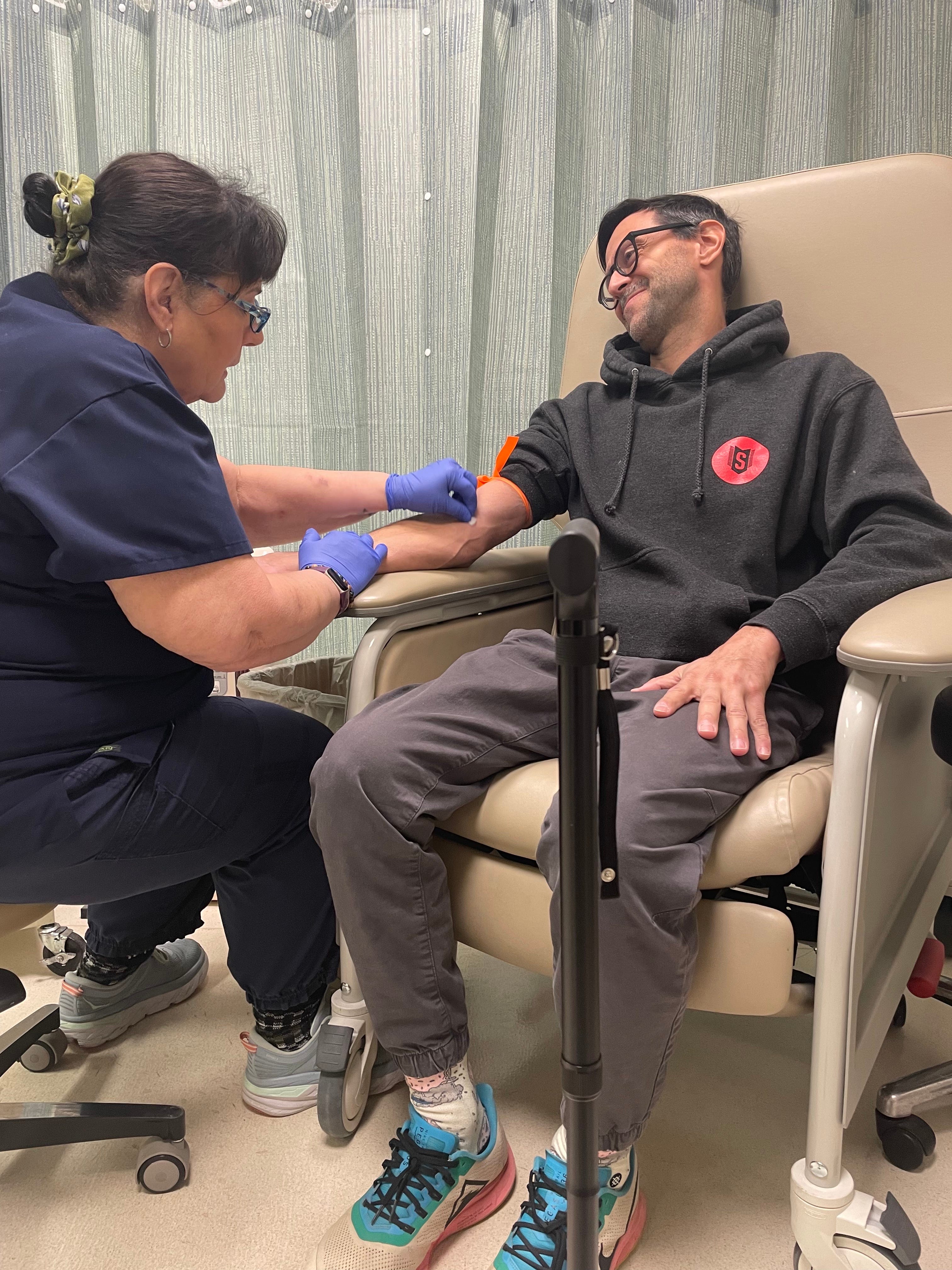
I’ve spoken so much about John’s determination — how deeply it touched every part of his life. When he was diagnosed in January 2024, that same determination applied quietly but fiercely, shaping the way he absorbed the news and how he chose to live with his diagnosis. I have encountered surprise and disbelief from many people, because they did not realize the seriousness of what John was facing or how badly John was doing. John, never intentionally, hid it well. He was not trying to misrepresent or deceive, nor was I. He was simply staying so positive. He was so determined. And he was never looking for sympathy or pity.
However — in light of everything — may I take a moment — in this post — to share what he endured? To face it more bluntly? To honor just how fiercely determined he was? So you may clearly see how bravely he faced it all? In his quiet determination, I think he inadvertently minimized or simply omitted how much he was facing. I think you will be shocked at what he endured, but not surprised at the dignity with which he carried it.
He deserves these parts of his story to be seen clearly, to be recognized and examined in detail. Because he walked through the hardest year and a half of his life with such grace and light.
You may not have had the misfortune of experiencing a loss like I have. Obviously, I had not, until now. My writing, first and foremost has been an outlet for my biggest, most painful feelings — but by extension— it often serves as a way for people around me to understand what I’m feeling.
Likely very few of you have had to watch someone you love be ravaged, hallowed out by cancer — especially at a young age. To witness firsthand the destruction, the horror, the pain that cancer brings. What I witnessed is part of what causes me pain. The helplessness is part of what causes me pain. The memories and details of what John faced continue to hurt me long after he finally has relief.
Trying to reach back in my memories
One of my dearest friends, a huge supporter of my writing, recently encouraged me to write about specific memories of John, farther back — to see where that might lead me. And, I genuinely want to try. I want to let myself reach back, into earlier memories, to access much longer ago in our 22 years together. To document that, not just my grief.
When I reach back — the details feel fuzzier right now. The past year and a half, and especially Spring 2025, take up the most space. Not just because they’re the most recent, but because they press down on me the hardest. What happened, and how it felt to live it. How things turned out.
What I’m writing today, in this post, is my attempt to honor those hardest parts more fully. To recognize the agony John faced. Because, as I said, he deserves to have even the most brutal pieces of his story seen.
And maybe — maybe if I give voice to his pain, if I lay out these details in all their brutal honesty — the things John endured that haunt me — I can begin to move through the trauma I carry from living them alongside him.
Maybe then, I can reach farther back.
Back to all the years before.
And more fully access the 22 years of memories we shared.
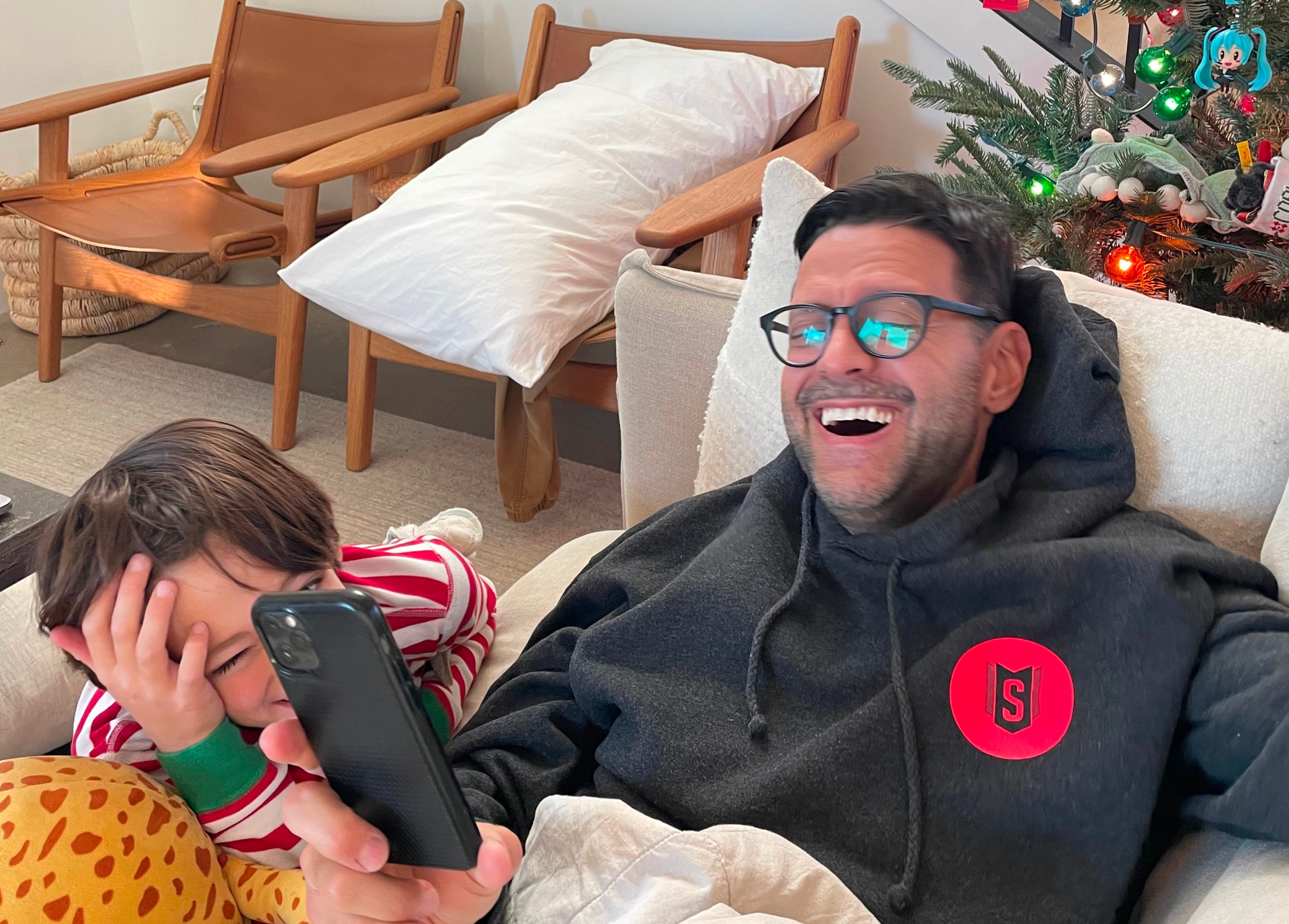
Some background
Allow me to start at the start, and go back to when this — this being cancer — became a part of our lives.
Diagnosis: December 2023 through January 2024
John is a curious person. He would tell you that he didn’t love school, all the way through undergrad. But he did always love learning, and he thrilled at the opportunity to self-teach. He would be curious about something or interested in a topic and he would dive into it fully. If he wanted to learn something, he would pursue it. This was personal passions as well as business ventures. He was confident and sure of himself.
So it’s no surprise to anyone who knew him that he approached cancer the same way. He researched. He learned. He asked questions. He was optimistic. And for the things within his control, he took control. His resolve to problem-solve his way through this was unwavering. It was easy to believe. Easy to be hopeful. Easy to champion his determination to beat the odds.
should we drown in these tears
or run and gather supplies to build a boat?
sink or swim?
we get to decide.— jessica jocelyn finding daisies
John built that boat. And, I gladly hopped in to help him row. As I’ve shared before, my belief that John would beat the odds was absolute. I’ve always been optimistic by nature, but John’s strength, his calm certainty, made it even easier to get on board. His confidence had a way of inspiring my own.
Deep down, I was terrified after his diagnosis. I remember those first few weeks after his diagnosis: I would break down, crying. The fear was overwhelming.
Treatments: February through October 2024
And then, John started improving.
His Denver oncologist’s first line of treatment was a gene-targeting chemotherapy pill called Tagrisso. You can read more about Tagrisso here, modern medicine is quite amazing. Technically, Tagrisso is approved for various stages of NSCLC in patients who have a EGFR+ mutation, which John had. It’s known for giving those early stage patients a long runway, before eventually losing efficacy. But even in John’s advanced stage, it still did amazing things.
Within a couple short weeks, the difference it was making for John’s pain and mobility was undeniable. This seemed like magic, not medicine. My terror began to loosen its grip. We settled in. John’s optimism and determination, always steady, really took the lead. That became our program. Even with the inevitable ups and downs, our optimism only grew stronger.
And again, I credit John. His strength. I cannot say that enough.
The efficacy of Tagrisso waned, as we knew it would. We had been so hopeful for twelve to eighteen months. Turns out we only got less than six months out of Tagrisso’s full efficacy for John. But John’s oncologists still believed it was doing something to hold his cancer at bay, so he continued to take it, at roughly $800 per pill, taken once daily. In the fall of 2024 he sought out treatments through Williams Cancer Institute because the only treatment his oncologist at UC Health had to offer him was traditional chemo. John, the tech guy, the ‘early adopter’, wanted something more targeted, more cutting edge than traditional chemo — and Dr. Williams was it. Through September and October 2024, we navigated treatments with Dr. Williams.
We entered 2025 with hope in our hearts, even joking: “We’re hoping for a boring year.”
This substack: This is how we got here
I started sharing details publicly, with John’s blessing of course, in my first post (written in late May) — every twist in John’s journey. I wrote it while he was in a procedure to place stents in the head of his pancreas, to stop bile from backing up into his liver.
While he was in that procedure, I wrote. I poured his story into that post from a place of hope, from the belief, still unshaken, that John was going to be okay.
That same day, I was also researching flights to Mexico. All we needed, I thought, was to get him back to Dr. Williams for more treatment and he’d be okay.
So you see, when I wrote that first post, I couldn’t have imagined this ending. I documented John’s story, but I don’t think I did justice to the pain he endured. Because I was still so full of hope. And I was sure his pain would come to an end — not because of his end, but because of healing and relief.
What he endured
You can re-read my original post and subsequent posts of John's journey (originally written and shared in May and June) — but my aim for the following passage is to retouch on particular, honest details here:
This fact is so scary to me: John’s doctors couldn’t tell us how long the cancer had been growing. But, his cancer grew terrifyingly silent in his body — possibly for years — until what he believed was a tennis injury turned out to be a tumor the size of a Chipotle burrito in his pelvis.
A month before we learned of the tumor, his annual physical, including regular bloodwork, had labeled him “the picture of health.” John was the healthiest person most people knew. And, in so many ways, he truly was. Systems in his body were in optimal health. He took such good care of himself. Now we know, despite that, cancer was also killing him, but he had NO symptoms until that ‘tennis injury’.
By the time we had a diagnosis, John’s cancer was stage 4B. John’s primary cancer was non-small cell lung cancer (NSCLC), and had never caused a single lung-related symptom, and that tumor in his pelvis was because it had already metastasized to his bones. The tumor in his pelvis was excruciating. According to John, the pain of bone metastasis was indescribable, pure agony.
Stage 4B of NSCLC (non-small cell lung cancer) carries a 5-year survival rate of just 5-10%. John survived 18 months after his diagnosis. I cannot type this without gasping for breath, sobs shaking my body. I never looked up this statistic until May 2025. I did not want to know.
John lost his ability to walk — twice. The first time was in January and February 2024, right around his diagnosis. The pain and mobility limitation was so severe, and he could only walk with the assistance of a walker.
Then again in April 2025, the walker returned. By late May 2025, stairs had become almost impossible. It is truly a miracle we got him to Mexico and even more so that we got him back to Denver.In August 2024, John passed a kidney stone — unrelated to his cancer, but still terribly painful. That morning was terrifying; we woke up to John in severe abdominal pain — we didn’t know what was happening. When we finally learned it was “just” a kidney stone, we were relieved. It was the rare instance when his suffering wasn’t tied to cancer, but even then, it was excruciating.
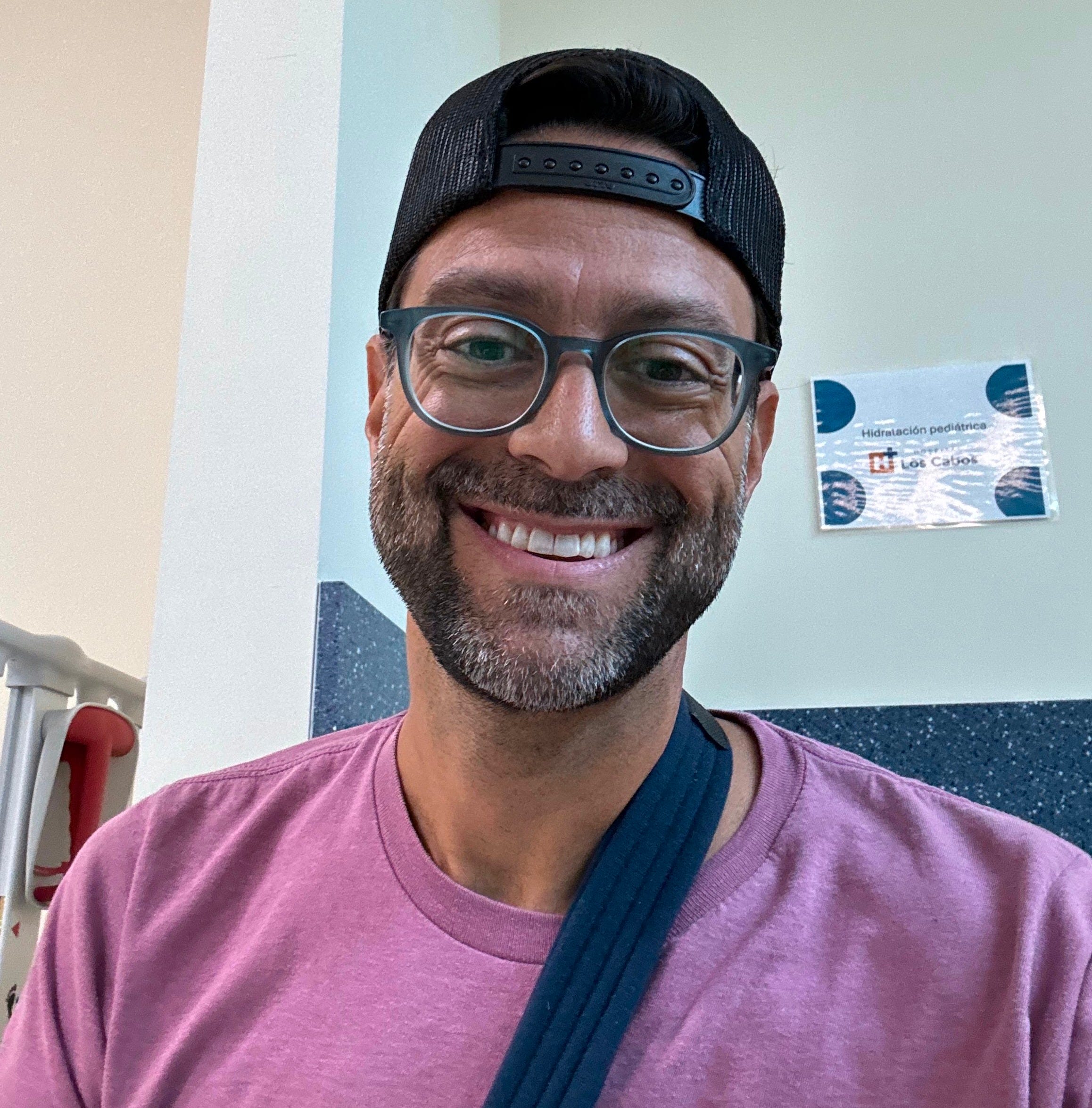
In late September 2024, John’s right humerus spontaneously fractured due to a tumor weakening the bone. The break ran crosswise and diagonal through his upper arm. He described the pain as the most painful thing he had ever experienced. He was at the self-checkout at Walmart, having just arrived in Mexico for his second round of treatment with Dr. Williams, when it happened. He dropped to the ground, bruising both knees, his arm sickeningly twisted and dangling at an odd angle.
Emergency orthopedic surgery followed: a titanium plate, screws, and cadaver bone grafts were placed to repair it.By May 2025, cancer had also spread to John’s pancreas. A tumor had grown in the head of the pancreas, blocking bile flow and causing it to back up into his liver. It was ‘discovered’ in May 2025 because I noticed John was jaundiced, but was not detected on PET scans just a month earlier in April 2025.
Without the emergency stents placed in late May, he would have gone septic within a week or two. Pancreatic metastasis from NSCLC is rare, but possible in advanced stages, like John’s.That medevac flight back to Denver on Tuesday, June 17th was, unfortunately to put it bluntly, a shit show. The doctors and nurses at the hospital in Mexico had been kind, compassionate, and gave John excellent care. But the medevac flight was poorly executed from the start. John was left lying on a stretcher on the tarmac for over an hour in 90-something degree heat, begging someone — anyone — for an umbrella to shade him. Why didn’t anyone shield him from the sun? This small detail, like so many others, shatters me. Haunts me. I cannot recall it without feeling it echo through my entire body. Once aboard the plane, the conditions were cramped. His oxygen line and IV were repeatedly stepped on, tugged, yanked. He lay in agony on the stretcher, on the plane, until he finally convinced them to let him sit in a regular seat — just for some small relief.
By the time the flight landed in Colorado, and Raffa and I met him at the airport, it was obvious: the journey had been horrible. I was so distraught. My update from that night is restrained — but when I reread it, I can see between the lines. I remember and vividly feel the panic, the helplessness, the distress I felt that afternoon and evening. John didn’t tell me the full story — about the tarmac, about his oxygen and IV lines — until the next day, once he was settled in a hospital room. And weeks later, after he was gone, the memories of that medevac experience would fully surface again. And haunt me. Another chapter in the long list of what he had to endure.
By the time John passed in June, the cancer had spread throughout the lymphatic system in his lungs — a condition called Pulmonary lymphangitic malignancy. This led to:
Severe breathing difficulties from fluid buildup and airflow obstruction causing John to feel immense anxiety about getting enough oxygen, waking up at night in the hospital panicked and gasping for breath
Diminished lung function as malignant cells clogged his lymphatic vessels
Once it was confirmed that the fluid in John’s lungs, his pneumonia, was not viral, not treatable, and was in-fact due to his cancer, I clung to the hope that the one treatment that John got with Dr. Williams on June 9th could be just enough to allow his lungs to improve. Of course now I understand how naive that hope was — the reality of Pulmonary lymphangitic malignancy. While we had been so busy problem-solving and remaining optimistic, John’s cancer had insidiously done what advanced stage cancer does.
All of Spring 2025 we were living in survival mode, desperately trying to problem solve John’s pain management and loss of mobility — all just to try and get his pain managed enough and him mobile enough to get to Mexico. John’s pain was so poorly managed — his doctor here in Denver was aware but the connection/referral to the care team who handles pain was given too late, in my opinion, and then there was a several-week wait for the first appointment with that team. We didn’t know what we didn’t know and we did not know who or what to ask for. We advocated for John’s care the best we knew how, but it was like groping in the dark for a feather. John had to use the ER four times in May for pain management because of uncontrollable, agonizing pain spikes. John was helpless, I was helpless.
Oddly enough, that period of time echos feelings I experience now, where everyone else is going on living their normal lives while I am stuck in this place where time and experience are distorted. And with the benefit of hindsight, I look back upon that time with sense of dread and deep empathy for how hopeful, naive, and determined we were.
The pain I witnessed John endure over the past year and half, but especially at the beginning of his diagnosis and then again in March-June 2025, is beyond words. It was horrifying and tortuous to witness. I can only imagine how that agony endured by John felt for him, physically, mentally, emotionally.
And those periods of intense pain do not even account for the constant, nagging pain he lived with throughout that year and a half. He downplayed it. He bore it. He pushed through it, to be present, to feel normal, to enjoy life with Raffa and me.
John’s strength
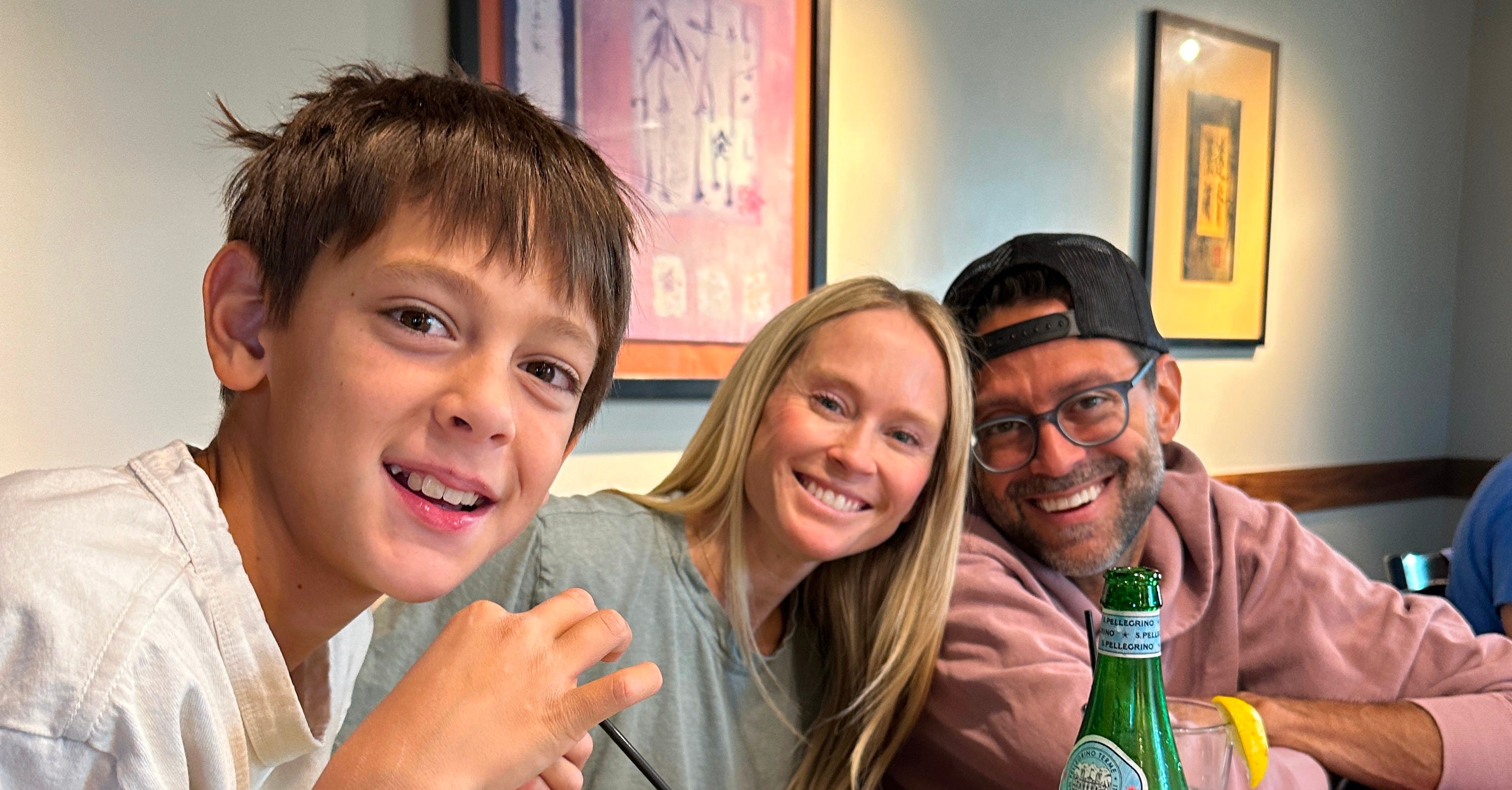
I think back to how present John was, how much normalcy he cultivated, even in the midst of everything. The way he focused on our routines, on the daily rhythms of life with the three of us, that is haunting and excruciating to remember now.
John never saw cancer as the thing that would take him. That’s why he clipped the labels off of his favorite coffee bags to remember them for purchasing in the future. That’s why he took a new (dream) job in April 2025. That’s why he was still working on multiple passion projects right up until June.
I always thought we’d grow old together — or at least grow much older. That’s why I bought him new underwear in April. That’s why I made sure he brushed his teeth, even when he was in the hospital in Mexico, because as I always tell him and Raffa, “oral health is overall health.” And that’s why I was still emailing his medical records to Immunocene (another cancer clinic) on Saturday, June 21st.
We prioritized our time together — not just after his diagnosis, but always. It was our greatest treasure, and we treated it that way.
But the fact that John was able to endure everything he did and still preserve a sense of normalcy, still create joy with us in the day-to-day — that was one of his greatest gifts. One of his greatest kindnesses.
Had he survived, as we all believed he would, it still would have been an extraordinary gift.
But now, left to navigate life without him, it has become the ultimate one.
We didn’t spend the last year and a half consumed by fear. We didn’t miss out on the chance to live. That time was filled with love, with joy, with optimism — with all the hope and certainty.
Now in the after, I have been more haunted by these details than I ever was before. I do not want to be free of this pain and these pieces of his story — I want to bear witness. But I do not want to be haunted either.
But maybe writing this is a path to being able to fully access more memories — farther back, before cancer — with more clarity and depth. Without the agonizing ones always bursting in.
I want to honor John more fully.
Not just document my grief,
but share the full, radiant life he lived —
the life we built together.
Even if it’s just to have it written down. For myself. For Raffa.
Because John was never defined by his suffering.
There is so much more to all that we lived.
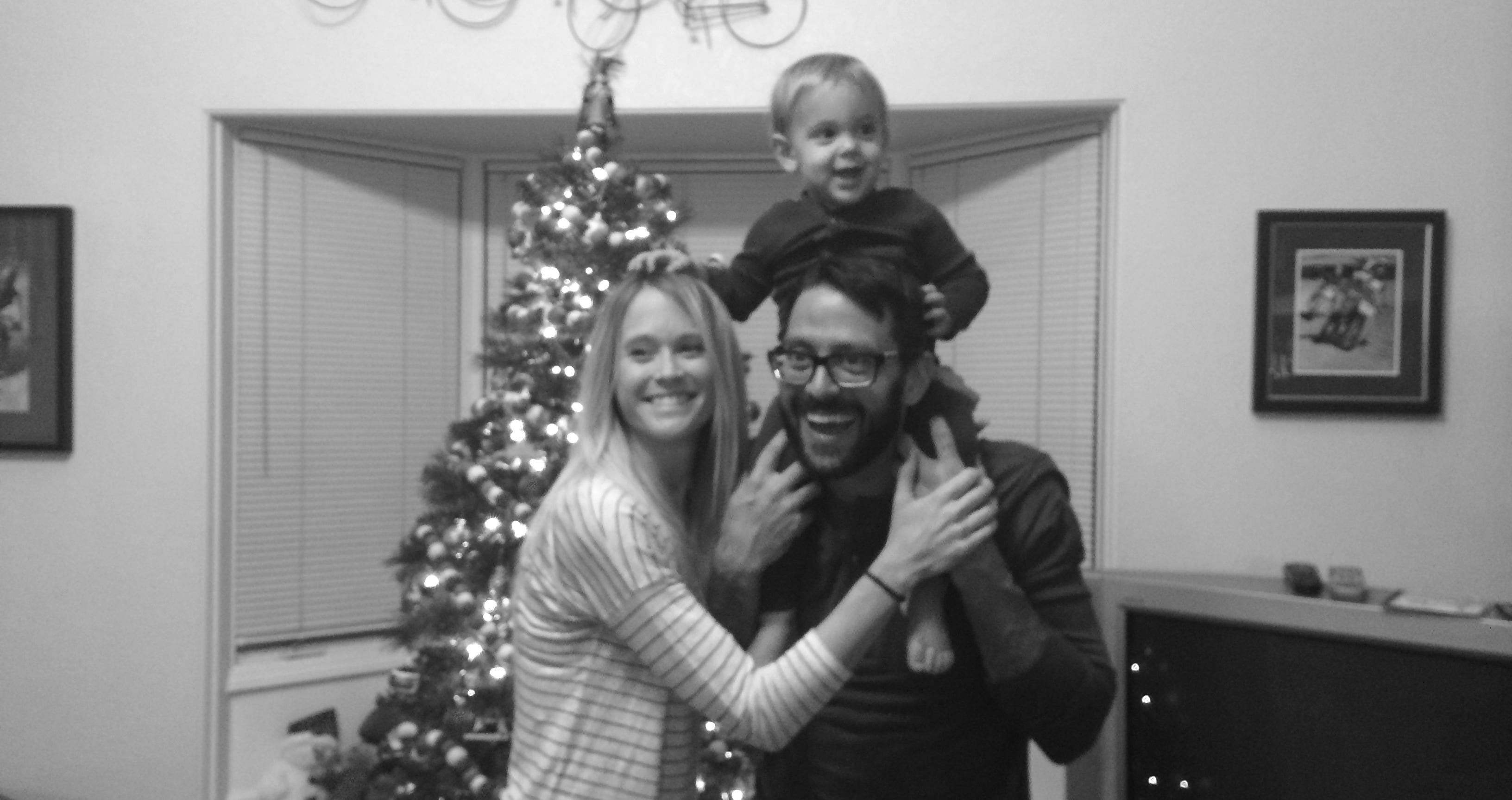
I couldn’t end without saying this — I miss John so very much — he was a deeply kind and loving and beautiful person. The dignity and strength with which he quietly endured his cancer is as heartbreaking as it is admirable.
I look at photos of him and ache to my very core knowing I will never see his face in person again. Not ever, ever, ever again.
It’s not that I can’t reconcile that reality — it’s that I don’t want to.
How could it not have turned out differently? After everything he endured — all the pain, all the suffering — he was supposed to be okay. He was supposed to come out the other side and move forward. With me. With Raffa.
if the time ever comes
when you lose yourself,
I will never
stop looking for you.
I will be the one in the dark,
holding a torch,
to help guide you home.— jessica jocelyn finding daisies
💔
Chole, I read your updates and tears fill my eyes. Your love for John and the life you built shines through. You have a beautiful gift to write in a way that makes the reader be along side you. Sending you love and admire your bravery to share this with us all. Hugs.